
Last Updated: November 2026
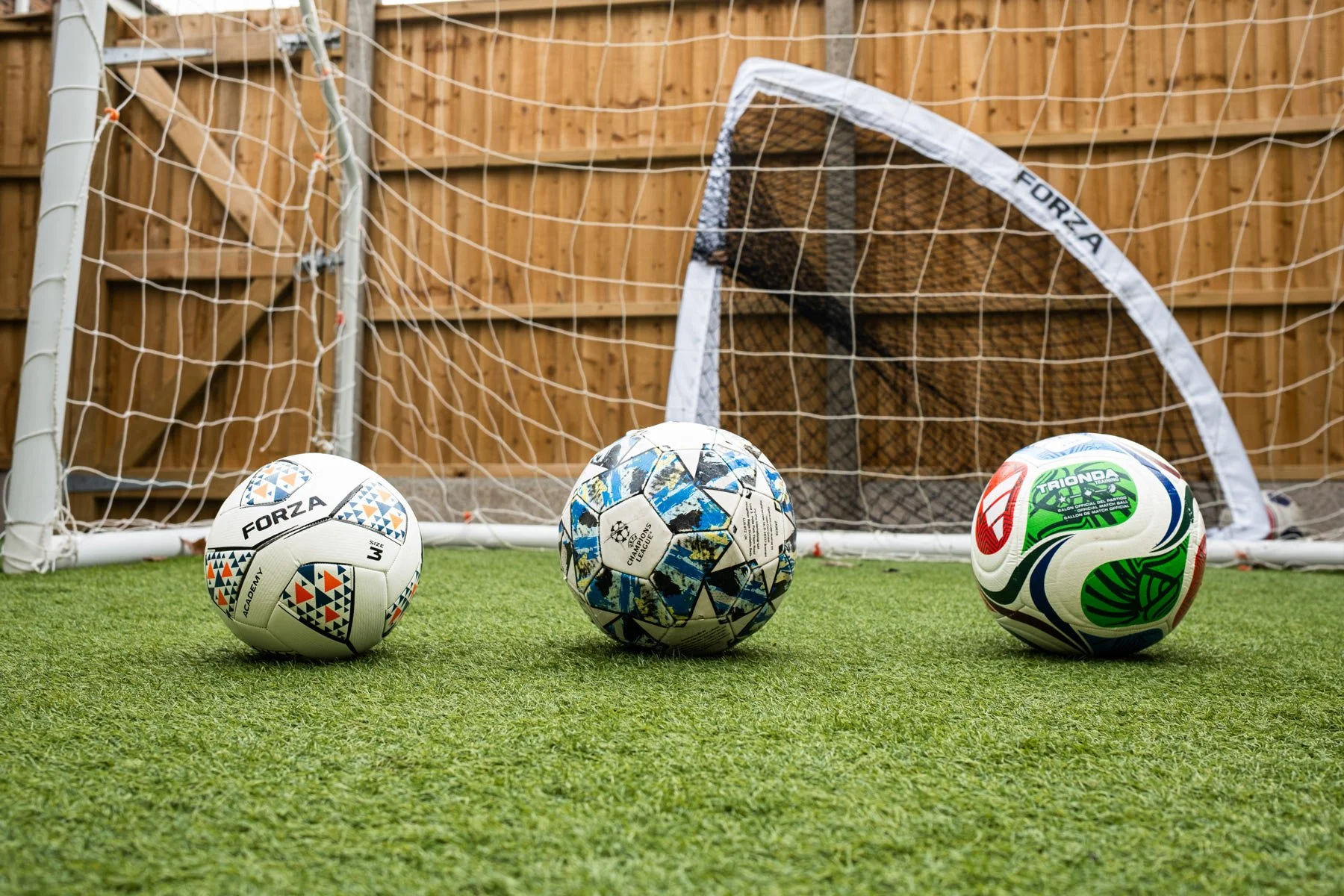
A brand-new ball is always a safe bet when it comes to buying a gift for a football-mad child.
My two boys, aged eight and six, have even purchased footballs with their own birthday and Christmas money.
If you’re thinking of buying a child a new football but aren’t sure which size is right for them, you’ve come to the right place.
It matters a little more than usual this year, too. The FA changed its ball sizes at the start of the 2026/27 season, but plenty of shop size charts still show the old ages.
Under the FA's 2026/27 rules in England, children use a size 3 football from Under 7s to Under 11s (school Years 2 to 6), a size 4 at Under 12s and Under 13s (Years 7 and 8), and a size 5 from Under 14s (Year 9) upwards.
Here’s everything worth knowing before you buy:
What Size Football Does My Child Need? (By Age and School Year)
| Age group | Typical age | School year | Format | Ball size |
|---|---|---|---|---|
| Under 7 | 6–7 | Year 2 | 3v3 | 3 |
| Under 8 | 7–8 | Year 3 | 5v5 | 3 |
| Under 9 | 8–9 | Year 4 | 5v5 | 3 |
| Under 10 | 9–10 | Year 5 | 7v7 | 3 |
| Under 11 | 10–11 | Year 6 | 7v7 | 3 |
| Under 12 | 11–12 | Year 7 | 9v9 | 4 |
| Under 13 | 12–13 | Year 8 | 9v9 | 4 |
| Under 14 | 13–14 | Year 9 | 11v11 | 5 |
| Under 15 | 14–15 | Year 10 | 11v11 | 5 |
| Under 16 | 15–16 | Year 11 | 11v11 | 5 |
These are the FA's ball sizes for youth football in England from the 2026/27 season:
The easy way to remember it: size 3 throughout primary school, size 4 for Years 7 and 8, and size 5 from Year 9.
My eight-year-old (Year 4) and six-year-old (Year 2) are both size 3 players, and will be for a few years yet.
If your child is younger than Year 2, a size 3 is still fine for the garden. Toddlers and pre-schoolers often get on better with a smaller mini ball (size 1 or 2).
One note: these are the English FA's sizes. Scotland, Wales and Northern Ireland set their own guidance, so check with your child's club if you live there.
What Are the New FA Football Sizes For 2026/27?
The new sizes are part of FutureFit, the FA's shake-up of grassroots youth football, which began this season.
Until last season, children used a size 3 up to Under 10s, a size 4 from Under 11s to Under 14s, and a size 5 from Under 15s. Two things are different now:
• Year 6 (Under 11s) stay on a size 3 instead of moving up to a size 4.
• Year 9 (Under 14s) move to a size 5 a year earlier than before.
The idea is one format, one ball. Each match format has also shifted back a year. Under 7s now start with 3v3, 7v7 runs to the end of primary school, 9v9 covers Years 7 and 8, and 11-a-side begins in Year 9. The ball only changes when the format does.
Why? The FA wants children to have more touches and be more involved in games. It studied youth football in more than 40 European countries and worked with Liverpool John Moores University on over 400 matches. Smaller formats came out on top.
There's also a practical benefit for schools: primary schools now require just one size of football.
Size 3 vs Size 4 vs Size 5: What's the Difference?
Each size up is a little bigger and a little heavier. These are typical figures, so check the listing of the ball you're buying.
Size 3
Years 2–6
- Circumference
- 58–60 cm
- Weight
- 300–320 g
Size 4
Years 7–8
- Circumference
- 63.5–66 cm
- Weight
- 350–390 g
Size 5
Year 9+
- Circumference
- 68–70 cm
- Weight
- 410–450 g
The gaps look small on paper. To a seven-year-old, they aren't. A size 5 weighs roughly a third more than a size 3.
A ball that's too big is harder to control, harder to strike cleanly and harder to get off the ground. Children end up toe-poking it or giving up on their weaker foot. The right size lets them dribble, pass and shoot with proper technique, which is how confidence grows.
When FORZA sent us a goal to review, they threw in a size 3 ball, which is what my eight-year-old son uses in his grassroots training sessions and matches. It’s the perfect size for primary school-aged kids.
What Size Football Do Girls Use?
The FA's table doesn't separate boys and girls. The ball size goes by age group and format, whoever is playing.
That said, some girls-only leagues set their own rules, and you may hear of girls' teams moving up a ball size a year later. If your daughter plays in a girls-only team, ask the coach which size they train and play with before you buy.
For a kickabout in the garden, follow the table above.
Which Football Should I Buy For the Garden or Park?
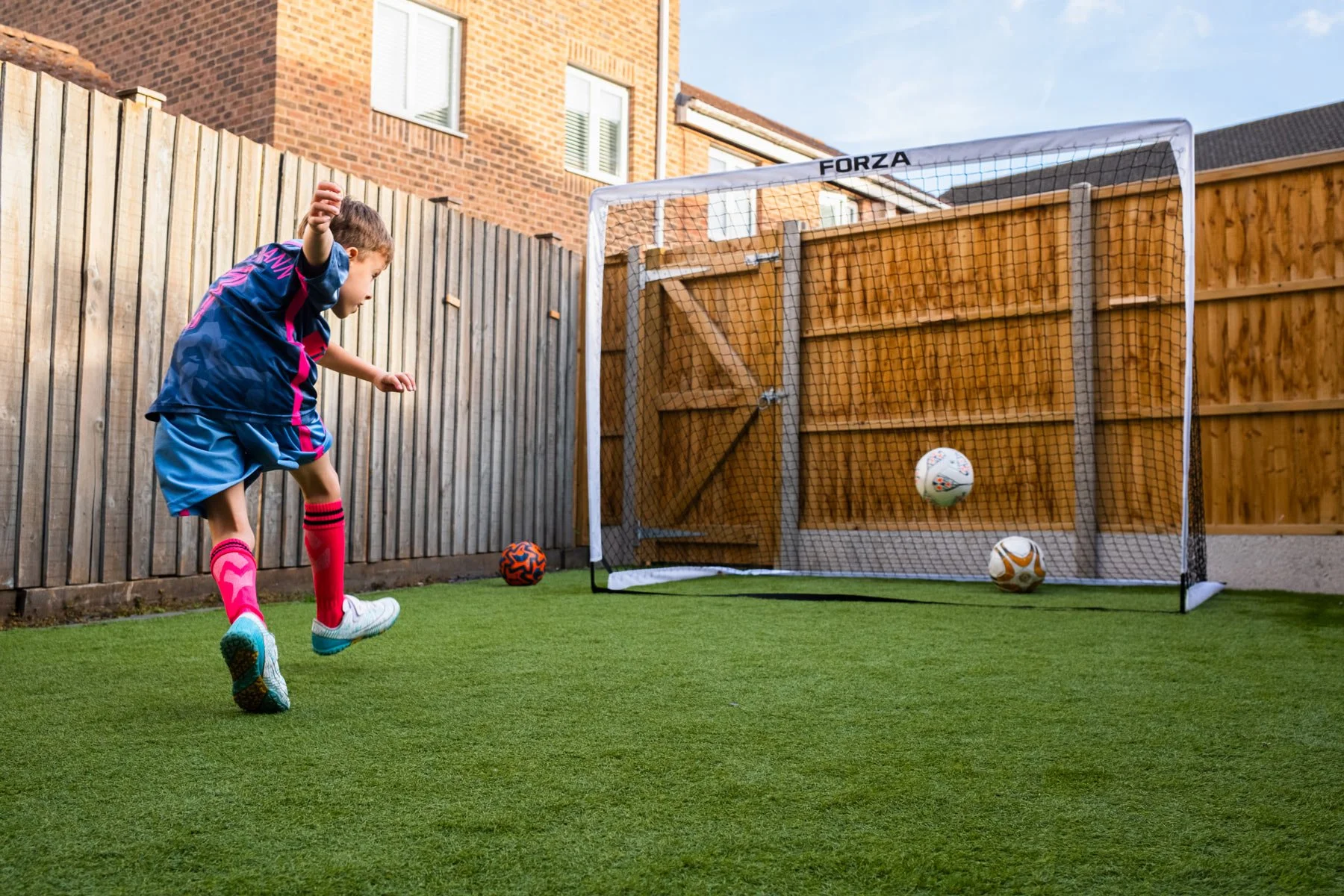
Buy the size your child plays matches with. Practising at home with the same ball they use on a Saturday or Sunday morning is what makes the difference.
A few things I've learned from two boys and a lot of lost footballs:
• You don't need a match ball. Match balls are built for the best touch and flight, and priced to suit. A training ball is tougher, cheaper and better suited to patios, fences and the odd trip over the neighbour's hedge.
• Buy one size, not two. If you have children in different age groups who are both in the size 3 bracket, like mine, one ball size covers everyone. That said, don’t sweat it if you can only find a size 4 or 5 football while out shopping. A child will probably love the ball regardless of the size.
• Check the size on the ball itself. It's usually printed near the valve. Don't rely on a shop's age label, because many still show the old ages.
• Avoid very light plastic balls for proper practice. They're fun on the beach but fly around in the wind and don't behave like a real football.
• Pick up a pump and needle if you don't own one. Most footballs arrive flat.
Our Football Picks: Size 3, Size 4 and Size 5
All three are balls from our own garden. We have the Trionda in a size 5, and it also comes in the size 4 shown here.
Link to the Champions League football is for the newer 2026/27 version.
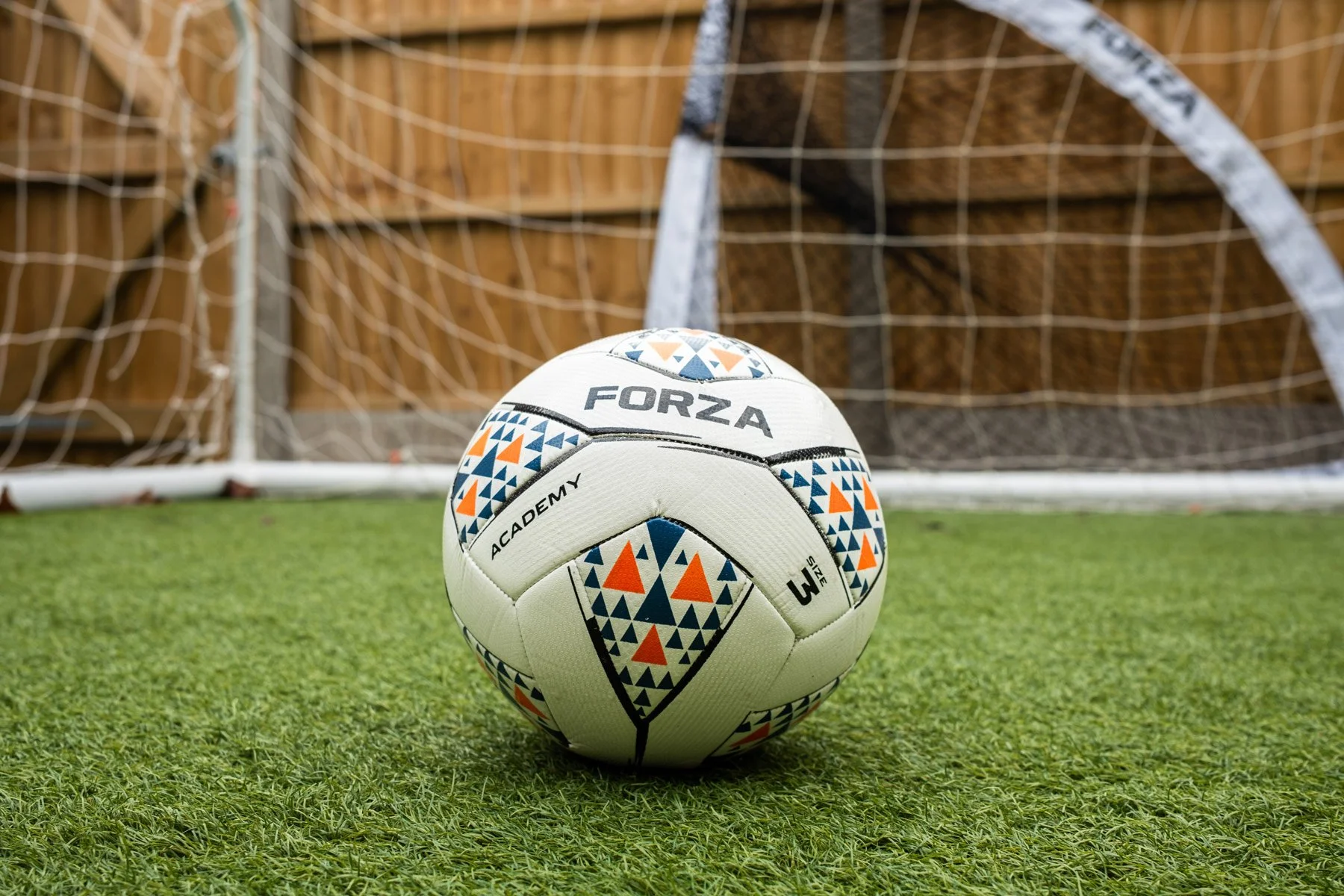
Years 2 to 6
FORZA size 3 training ball
The ball my two boys use in the garden. Perfect for primary school-aged children.
Check price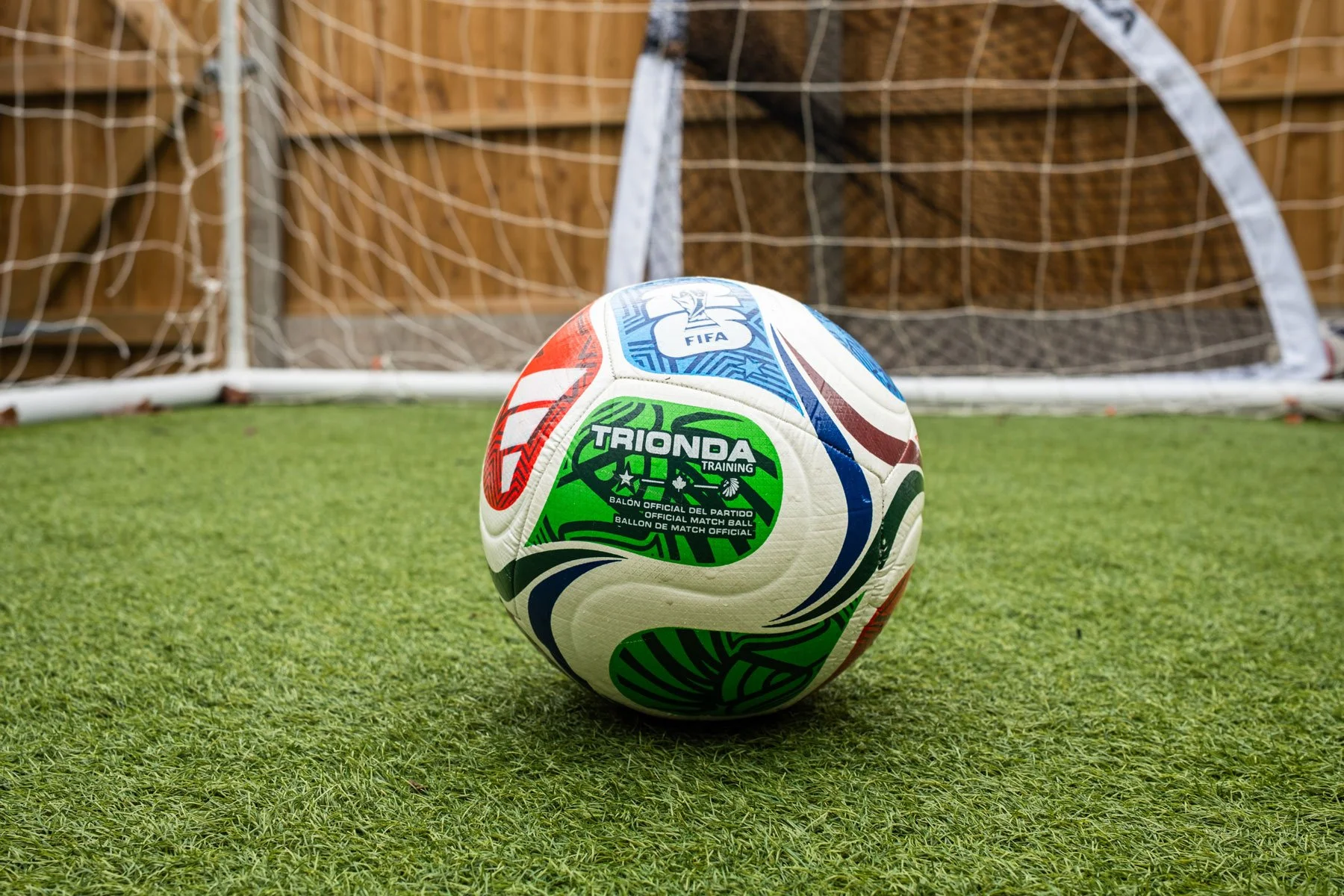
Years 7 and 8
Trionda 2026 World Cup Ball (Size 4)
The step up for 9v9. Great for the first two years of secondary school.
Check price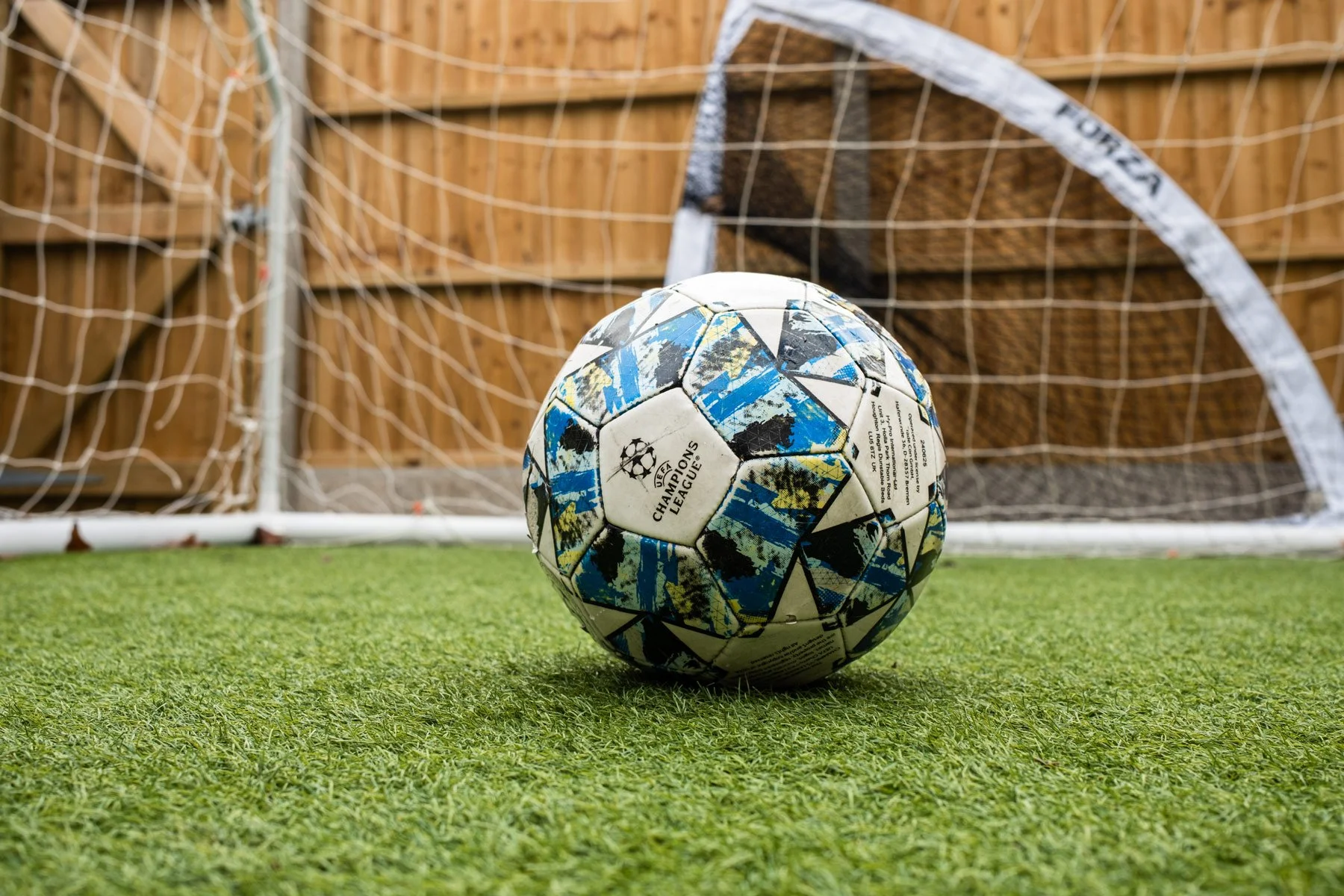
Year 9 and up
Champions League football (Size 5)
The full-size ball for 11-a-side. The same size used by professional footballers.
Check price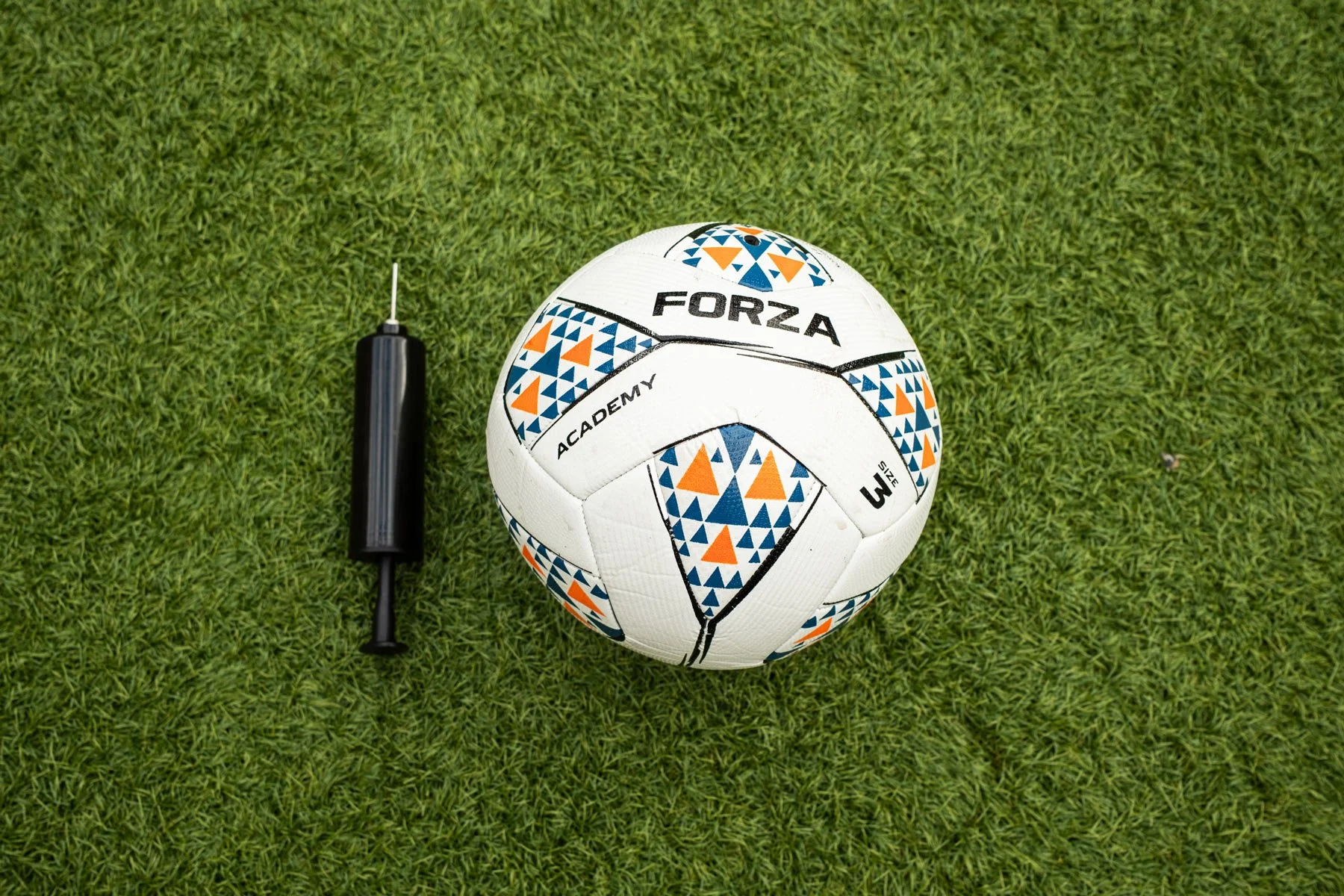
Don't forget
A ball pump and needle
Most footballs arrive flat, so remember to buy a pump!
Check price on AmazonThese are affiliate links. If you buy through them, I may earn a small commission at no extra cost to you.
What Size Football Should I Buy as a Gift?
Buy for the size they use now, not one to grow into. A ball that's too big won't get used properly, and footballs rarely last long enough to be grown into anyway.
The only time to think ahead is when a child is about to move up:
• Year 6: they'll use a size 3 until the summer, then a size 4 from September when they begin Year 7. If they already own a decent size 3, a size 4 makes a good gift to get used to over the summer. If not, stick with a size 3.
• Year 8: the same applies one step up. A size 4 for now, a size 5 from September.
• Everyone else: buy the size in the table above.
Buying for a niece, nephew or grandchild and not sure of the age group? Ask which school year they're in. That's all you need.
Free Printable: The New Ball Challenge
A new football is even better with something to aim for.
I've made a free one-page printable with 20 skills for your child to master with their new ball. It starts with toe taps and wall passes and builds up to keepy-uppies and hitting the crossbar. There's a box to tick for each skill and a certificate to fill in at the end.
Print it, wrap it up with the ball, and the present comes with a challenge attached.
Pop your email in below and you’ll be taken straight to the download.

FAQ
-
A size 3. It’s the smallest size used in organised football in England and is fine for younger children in the garden too.
-
A size 3. Children in Years 2 to 6 all use a size 3 under the FA’s 2026/27 sizes.
-
Yes. Under the FA's 2026/27 sizes, children use a size 3 right up to the end of Year 6 (Under 11s). Older size charts that say size 4 for a 10-year-old are out of date.
-
A size 4 if they’re in Year 7 or 8. A child who is 11 but still in Year 6 uses a size 3.
-
A size 5 from Year 9. A 13-year-old in Year 8 still uses a size 4.
-
In Year 9 (Under 14s), when 11-a-side begins. A size 5 is the full-size ball used in the adult game.
-
Yes. The FA says the changes cover school football too, from the start of the 2026/27 school year. Primary schools now use a size 3 throughout.
-
Futsal balls are different. They're smaller and have a low bounce, so they stay on the floor. Adults use a size 4 futsal ball. Younger children usually use a smaller one, so check with your club or league.
-
Not necessarily. Some leagues are still catching up, and clubs don't replace every ball overnight. Ask the coach which size they use on match days and buy that.
That’s everything you need to choose the right size football. If you’re buying one as a present, don’t forget the free New Ball Challenge above to wrap up with it.
Standing on a cold touchline this winter? Read next: How to Keep Warm at Kids’ Football Matches.
For more tips and reviews, follow me on TikTok.

About the Author
Rob Swan is a football writer and news editor with more than 18 years in sports media, and a grassroots touchline dad.
He started Starlet Media to help parents navigate youth football, with independent gear reviews, money-saving tips, creative inspiration and real-world guides. Read more about Rob.
Got a question, or want to work together? Use the contact page or email: hello@starletmedia.co.uk